Chikungunya virus: China reports 7,000 cases

BBC News, Singapore

 Getty images
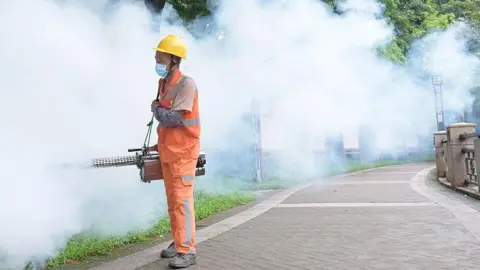
More than 7,000 cases of viruses transmitted by mosquitoes have been reported in the Chinese province of Guangdong since July, which has caused measures similar to those taken during the Pandemic COVID-19.
In the city of Foshan, which has been struck hardest, Chikungunya patients must stay in the hospital, where their beds will be protected with mosquito nets. They can only be released after testing negative or at the end of a week’s stay.
Surprise by the bite of an infected mosquito, the virus causes fever and severe joint pain, which can sometimes last for years.
Although rare in China, chikungunya epidemics are common in South and Southeast Asia and in certain parts of Africa.
To what extent are China infections widespread?
Apart from Foshan, at least 12 other cities in the south of Guangdong province reported infections. Nearly 3,000 cases were reported last week.
On Monday, Hong Kong reported his first case – a 12 -year -old boy who developed fever, rashes and joint pain after going to Foshan in July.
The virus is not contagious and only spreads when an infected person is bitten by a mosquito that continues to bite others.
Officials say that all reported cases have been light so far, 95% of patients released within seven days.
However, cases have led to a certain panic, since the virus is not widely known in the country.
“It is frightening. The prolonged consequences seem very painful,” wrote a user on the Chinese social media platform Weibo.
The United States has urged travelers in China to show “increased caution” after the epidemic.
 Getty images
What else does China do to limit infections?
The authorities of the Guangdong province have promised to take “decisive and energetic measures” to stop the spread of the disease.
Those who have symptoms, such as fever, joint pain or rashes, are invited to visit the nearest hospital so that they can be tested for the virus.
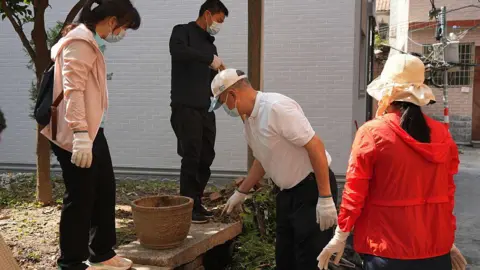
The authorities asked residents to eliminate stagnant water in their homes, such as flower pots, coffee machines or spare bottles – and have warned fines up to 10,000 yuan ($ 1,400) if they do not.
They also publish giant “mosquitoes” which can devour smaller and widespread bugs from Chikungunya; and an army of mosquito eating fish.
Last week, Foshan officials released 5,000 of these larvae eaten fish in the city’s lakes. In some parts of the city, they are even flying drones to detect stagnant water sources.
Some neighboring towns had ordered Foshan travelers to have a 14 -day forty at home, but this has since been withdrawn.
Some people compared these measures to those imposed during the pandemic and questioned their necessity.
A Weibo user wrote: “These feel so familiar … But are they really necessary?”
Another wrote: “What is the interest of the forties? It is not as if an infected patient was then going to bite others?”
China has implemented serious restrictions during the pandemic, in particular by forcing people to quarantine camps and the sealing of residential buildings and entire short -term neighborhoods for days or even weeks.
What is chikungunya?
Most people bitten by an infected mosquito will develop chikungunya symptoms within three to seven days.
In addition to fever and joint pain, other symptoms include rashes, headache, muscle pain and swollen joints.
In most cases, patients will feel better in a week. However, in serious cases, joint pain may last for months or even years.
People at risk of more serious illnesses include newborns, the elderly and people with underlying medical conditions, such as heart disease or diabetes.
There is no remedy, but the deaths of Chikungunya are rare.
The virus was first identified in Tanzania in 1952. It then spread to other countries in sub-Saharan Africa and Southeast Asia.
To date, it has been reported in more than 110 countries.
The best way to prevent the virus from spreading is to reduce stagnant water pools that allow mosquitoes to reproduce, according to the World Health Organization.
https://ichef.bbci.co.uk/news/1024/branded_news/5d90/live/4e815f10-71c6-11f0-b5ea-af0b36d22169.jpg
About The Author